ER14250S High Temperature Battery: The 150°C Power Source Built for the Harshest Environments
ER14250S High Temperature Battery: The 150°C Power Source Built for the Harshest Environments
When a standard lithium battery meets a 150°C downhole tool, it does not simply degrade — it fails. In the oil and gas industry, in ocean-going container tracking, and in tire pressure monitoring systems, ambient temperature is not a comfort factor. It is a hard constraint that determines whether a battery survives its first week of service. This is precisely why the ER14250S high temperature battery has become the default power solution for engineers who cannot afford a single field failure.
At SER, we have spent years refining high-temperature lithium thionyl chloride (LiSOCl2) chemistry until it performs where others fall apart. The result is a 1/2AA cylindrical cell that delivers a stable 3.6V, a genuine 600mAh of capacity, and dependable operation across an extraordinary -55°C to +165°C window. Below, we break down everything you need to know about this cell — its chemistry, its construction, its performance limits, and the applications where it earns its keep.
Why LiSOCl2 Chemistry Is the Right Choice for Extreme Heat
Before we discuss the ER14250S specifically, it helps to understand why lithium thionyl chloride has long been the chemistry of choice for extreme-temperature primary batteries. Unlike conventional lithium-ion or lithium-manganese cells, LiSOCl2 cells are non-rechargeable primary cells with one of the highest energy densities of any battery technology commercially available. They combine a lithium metal anode with a thionyl chloride cathode and a non-flammable, inorganic electrolyte.
Three properties make this chemistry uniquely suited to heat:
Extremely high energy density. A LiSOCl2 cell packs more usable energy per unit of volume than almost any competing primary chemistry, which matters when your device has a fixed battery compartment in a downhole tool or a compact sensor housing.
Wide operating temperature range. Quality LiSOCl2 battery operate far beyond the comfort zone of standard batteries, sustaining both -40°C cold-start and +150°C continuous operation.
Ultra-low self-discharge. At room temperature, a well-built LiSOCl2 cell loses less than 1% of capacity per year, enabling decade-plus shelf life and long field service without recharging.
The ER14250S applies all three advantages inside a compact 1/2AA package, making it one of the most versatile high-temperature cells in our line.
ER14250S: Technical Specifications at a Glance
表格
Battery model | ER14250S (LiSOCl2, 150°C) |
Battery brand | SER or OEM |
Nominal voltage | 3.6V |
Capacity (23±2°C, 10mA to 2.0V) | 600mAh |
Open-circuit voltage | ≥3.64V |
Chemistry | Lithium thionyl chloride (Li-SOCl2) |
Cell shape / size | Cylindrical, 1/2AA |
Continuous working current | 10mA |
Max pulse working current | 50mA |
Operating temperature range | -55°C to +165°C |
Storage / shelf life | Up to 10 years (below +35°C) |
Termination options | Standard (S), Solder Tabs (T), Axial Pins (P), custom on request |
These figures are not theoretical. Every ER14250S leaving our facility is tested against these benchmarks, and the datasheet above reflects real, measurable performance — not optimistic marketing numbers.
Super High-Temperature Performance: Built for 150°C and Beyond
The headline capability of this cell is its ability to keep delivering power when the temperature climbs toward its rated limit. Standard lithium cells begin to suffer accelerated self-discharge, electrolyte breakdown, and internal pressure buildup well before 100°C. The ER14250S high temperature battery is engineered to hold its voltage curve through continuous 150°C service, and our proprietary manufacturing process allows the cell to operate in environments reaching 165°C without losing its structural or electrochemical integrity.
This is achieved through several deliberate design choices:
A precisely designed safety valve that relieves internal pressure before it can build to dangerous levels, giving operators peace of mind regarding explosion risk.
Exquisite material selection matched to the stress of sustained high temperature, so seals and gaskets do not embrittle or creep.
A robust hermetic construction that isolates the reactive chemistry from moisture and contaminating gases, which is the leading cause of premature cell failure in the field.
The result is a battery that does not merely "survive" high temperature — it performs at rated specification while doing so. For MWD/LWD tools that cycle repeatedly between cool surface conditions and scorching downhole environments, this reliability is the difference between a successful run and an expensive, tool-damaging shutdown.
Ultra-Low Self-Discharge: A Decade of Readiness
One of the least obvious but most valuable properties of the ER14250S is its extraordinarily low self-discharge rate. At room temperature, this LiSOCl2 battery loses less than 1% of its capacity per year. Even when stored in environments below +35°C, the cell retains the majority of its energy for a full 10 years — and based on long-term production inspection and customer use tracking, we routinely see field service life reaching 10 to 15 years.
Why does this matter in practice? Consider a container GPS tracker that must be ready to transmit location data at any moment across a multi-year voyage. Or a TPMS sensor embedded in a truck tire, sealed away where no technician will touch it for the life of the tire. Or a medical implant waiting years before it is called upon. In all these cases, the battery cannot be "recharged" or "topped up." It must hold its charge silently and reliably for years, then deliver full performance on demand. The ER14250S is engineered specifically for this kind of long-term duty.
High Capacity, Stable Voltage, High Energy Density
In a device where space is fixed, energy density decides how long the device can run. The ER14250S delivers a stable, high operating voltage (3.6V nominal) with a flat discharge curve that holds voltage under load far better than many competing chemistries. Its compact 1/2AA format packs 600mAh of usable capacity, and its high energy density means designers can fit the power they need into a smaller cavity, freeing room for sensors, communications modules, or additional redundancy.
For pulsed loads — such as the transmission bursts of a container tracker or the periodic radio wake of a wireless sensor — the ER14250S supports a pulse current of up to 50mA, comfortably covering the short, high-current demands that flat DC loads cannot.
Safety: Non-Combustible Construction You Can Rely On
Battery safety is non-negotiable, especially in oilfields, vehicle systems, and medical devices where a fire or explosion could cause injury or major property damage. The ER14250S is designed with safety as a primary engineering objective, not an afterthought:
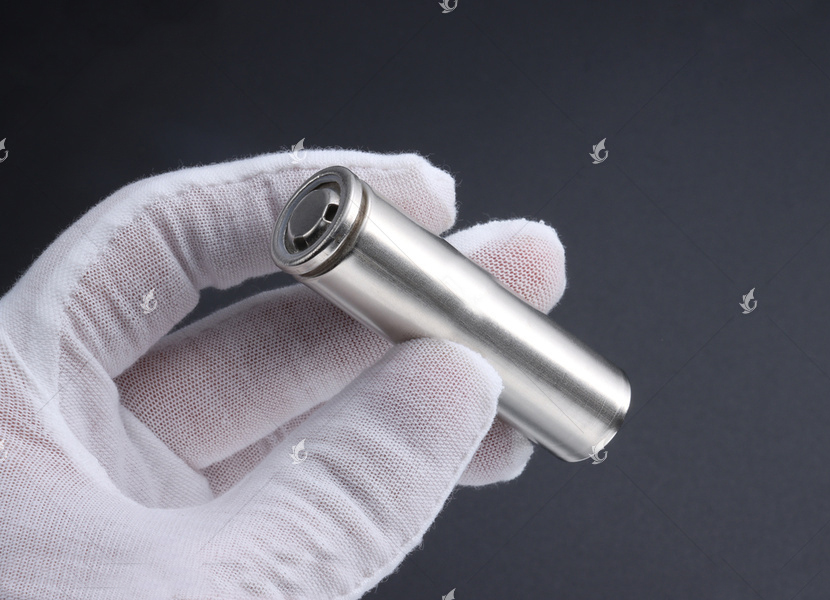
All-stainless-steel outer body provides robust mechanical protection against crush, puncture, and the physical shocks of downhole or on-vehicle service.
Metal-glass hermetic sealing structure keeps the cell permanently sealed against moisture ingress, eliminating a key trigger for internal corrosion and unwanted reactions.
Non-combustible inorganic electrolyte removes the flammability risk associated with organic electrolytes used in many other lithium chemistries.
Engineered safety valve and material selection manage internal pressure gracefully, protecting against explosion risk.
These attributes make the ER14250S a dependable choice in environments where a battery failure is not an inconvenience — it is a hazard.
Where the ER14250S High Temperature Battery Excels
The combination of high-temperature tolerance, low self-discharge, and robust construction positions the ER14250S for a wide range of demanding applications:
MWD / LWD Downhole Tools (Measurement While Drilling / Logging While Drilling). Downhole temperatures routinely exceed 150°C in deep and geothermal wells. The ER14250S provides the reliable primary power that MWD/LWD tools depend on to transmit directional and formation data from the bottom of the hole to the surface. High-temperature performance here is not optional — it is the entire reason this cell exists.
Container Tracking & GPS Tracking. From the cold of a polar shipping route to the heat of a desert port, ocean containers endure brutal temperature swings. A tracking module must be ready to report at any moment, often for years without maintenance. The low self-discharge and wide temperature range of the ER14250S make it ideal for these untended, long-haul deployments.
Medical Devices. Certain implanted and external medical devices operate in a narrow thermal window where battery reliability is a matter of patient safety. The stable, long-lived output of this cell supports devices that must function predictably over many years.
TPMS Sensors (Tire Pressure Monitoring Systems). A sensor embedded in a tire lives inside one of the most thermally hostile environments in a vehicle — alternately heated and chilled, always in motion. The ER14250S's combination of compact size, temperature resilience, and long life is a natural fit.
Flexible Terminations and Customization
Real-world applications rarely use a "stock" battery. That is why the ER14250S is available with a range of terminations to suit your assembly process:
Standard Terminations (S) for conventional connection.
Solder Tabs (T) for welded or soldered integration into your PCB or harness.
Axial Pins (P) for through-hole mounting.
Special terminations available on request, tailored to your specific mechanical interface.
We also manufacture under OEM branding, so the cell can carry your product's identity if required. Whatever your mechanical or electrical integration looks like, we can supply the ER14250S in the form that drops straight into your production line.
Storage, Handling, and Longevity Guidelines
To get the full 10-year shelf life from your ER14250S cells, follow these simple storage guidelines:
Store in a clean, dry, and well-ventilated environment.
Keep temperature below +20°C for optimum long-term storage (the +35°C figure reflects the maximum for the 10-year rating).
Avoid exposure to extreme heat, moisture, and direct sunlight during storage.
Observe the standard lithium battery handling precautions: do not disassemble, deform, crush, incinerate, or short-circuit; keep away from children.
Adhering to these practices preserves the cell's charge and ensures it performs to specification when finally commissioned.
Why Choose SER for Your High Temperature Battery Supply
SER has built its reputation on exactly the kind of demanding, high-stakes applications described above. We are not a generalist battery supplier — we specialize in precision lithium chemistry, including LiSOCl2 cells engineered for extreme temperatures. When you choose the ER14250S high temperature battery from SER, you receive:
A fully documented cell with real, tested performance figures you can build your qualification around.
Manufacturing flexibility, including OEM branding and custom terminations.
A stable supply partnership with a manufacturer that understands that a failure in your product is a failure in ours.
Application support from engineers who know how these cells behave in downhole, marine, and vehicle environments — not just on paper.
The ER14250S: Your High-Temperature Power Solution
When your application demands a high temperature battery that delivers a stable 3.6V, a genuine 600mAh, a 10-year shelf life, and dependable performance from -55°C up to 150°C — and beyond to 165°C in our high-performance builds — the ER14250S is engineered to answer the call. Its LiSOCl2 chemistry, stainless-steel hermetic construction, and non-combustible design make it the sensible, safe choice for downhole tools, container tracking, medical devices, and TPMS sensors.