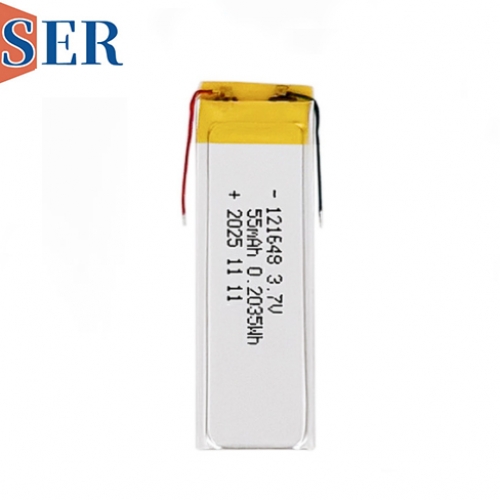
Self-Discharge in LiSOCL2 Battery, LiPo Battery & Ultra Thin Battery: Key Influencing Factors
Self-Discharge in LiSOCL2 Battery, LiPo Battery & Ultra Thin Battery: Key Influencing Factors & Serui’s Low-Self-Discharge Solutions
In the dynamic landscape of lithium battery technology, LiSOCL2 batteries, LiPo battery (lithium-polymer batteries), and ultra thin batteries have become the backbone of modern devices—powering industrial sensors, wearables, medical equipment, and consumer electronics. While these batteries offer unparalleled advantages like high energy density and compact design, self-discharge remains a critical factor that impacts their shelf life, reliability, and performance. Self-discharge, the gradual loss of capacity when a battery is in an open-circuit state, is an inherent chemical phenomenon, but its rate is far from fixed. Multiple factors—from environmental conditions to manufacturing processes—dictate how quickly a battery loses its charge when not in use. At Serui Battery (www.serui-battery.com), a global leader in lithium battery innovation and manufacturing, we leverage decades of expertise to understand and mitigate these factors, delivering LiSOCL2 batteries, LiPo batteries, and ultra thin batteries with industry-leading low self-discharge rates. In this comprehensive guide, we break down the core factors influencing self-discharge and showcase how Serui’s advanced technology and rigorous quality control ensure our batteries retain capacity longer, powering your devices reliably for years.
Understanding Self-Discharge: A Foundation for Battery Performance
Before diving into the influencing factors, it’s essential to establish a clear understanding of self-discharge and its implications. Self-discharge refers to the gradual reduction in a battery’s stored capacity when it is not connected to a load or charger. This occurs due to unintended chemical reactions within the battery, which consume active lithium ions, electrolyte, and electrode materials—even when the battery is idle. All lithium batteries, whether LiSOCL2 batteries, LiPo batteries, or ultra thin batteries, exhibit self-discharge, but the rate varies dramatically based on external conditions and internal design.
A low self-discharge rate is critical for applications that require long-term storage, maintenance-free operation, or immediate readiness—such as remote industrial sensors (powered by LiSOCL2 batteries), emergency medical devices (using LiPo batteries), or wearable tech (relying on ultra thin batteries). Excessive self-discharge can render a battery unusable prematurely, leading to costly downtime, product failures, and customer dissatisfaction. For example, a LiSOCL2 battery deployed in a deep-sea monitoring sensor might need to retain 90% of its capacity after 5 years of storage, while an ultra thin battery in a fitness tracker should hold enough charge to power the device for weeks between uses.
At Serui Battery, we measure self-discharge rates using industry-standard metrics: percentage of capacity lost per month (%/month) or per year (%/year) for long-term applications, and voltage drop per day (mV/day) for voltage-sensitive devices. Our benchmark specifications set us apart: LiSOCL2 batteries with ≤1% self-discharge per year, high-performance LiPo batteries with ≤3-5% per month, and ultra thin batteries with ≤4-6% per month—all significantly below industry averages. These achievements are rooted in our deep understanding of the factors that drive self-discharge and our commitment to engineering solutions that counteract them.
The Top 5 Factors Influencing Self-Discharge Rates
Self-discharge in LiSOCL2 batteries, LiPo batteries, and ultra thin batteries is shaped by a complex interplay of environmental, design, and manufacturing factors. Below, we explore the five most critical influencers, explaining how they impact each battery type and how Serui addresses them to minimize self-discharge.
1. Temperature: The Most Critical Factor
Temperature is universally recognized as the single most influential factor on battery self-discharge. The principle of chemical kinetics dictates that for every 10°C increase in temperature, the rate of chemical reactions doubles—including the unintended side reactions that cause self-discharge. High temperatures accelerate electrolyte decomposition, SEI (Solid Electrolyte Interface) film growth and decomposition, metal ion dissolution, and internal micro-short circuit risks—all of which drive up self-discharge rates. Conversely, low temperatures (within safe operating ranges) slow these reactions, extending battery shelf life.
Impact on Different Battery Types:
Serui’s Solutions to Mitigate Temperature Impact:
2. State of Charge (SOC): Balancing Storage and Performance
The state of charge (SOC)—the percentage of a battery’s maximum capacity that is currently stored—directly impacts self-discharge rates. A battery with a higher SOC has greater electrochemical potential between its positive and negative electrodes, creating a stronger driving force for unintended side reactions (e.g., electrolyte oxidation, SEI film growth). This means fully charged batteries (100% SOC) self-discharge faster than those stored at a partial SOC.
Industry consensus recommends storing lithium batteries at a 40-60% SOC for long-term shelf life. This balance minimizes electrochemical potential while preventing the battery from entering deep discharge (which can cause irreversible damage).
Impact on Different Battery Types:
Serui’s Solutions to Optimize SOC:
3. Time: The Cumulative Effect of Self-Discharge
Self-discharge is a continuous, time-dependent process. The longer a battery is stored or idle, the more cumulative capacity it loses—even under optimal temperature and SOC conditions. This is because side reactions (e.g., SEI film growth, electrolyte decomposition) occur incrementally over time, consuming active materials slowly but steadily.
Impact on Different Battery Types:
Serui’s Solutions to Extend Time-Dependent Performance:
4. Battery Material System: The Role of Electrodes and Chemistry
The choice of electrode materials and battery chemistry is a foundational factor in determining self-discharge rates. Different materials have varying levels of electrochemical stability—some are prone to side reactions, while others resist unintended degradation. The material system directly impacts how quickly a battery loses capacity during storage and use.
Key Material Influences:
Impact on Different Battery Types:
Serui’s Material Selection for Low Self-Discharge:
5. Production Process: Precision and Purity as Defenses Against Self-Discharge
The manufacturing process plays a critical role in determining self-discharge rates. Even the best material system can be undermined by poor production practices—such as contamination, inadequate humidity control, or imprecise assembly. Key process factors include cleanroom quality, humidity management, burr removal, and electrolyte injection precision.
Critical Process Factors:
Impact on Different Battery Types:
Serui’s Production Process Excellence:
Why Serui Battery’s LiSOCL2, LiPo, & Ultra Thin Batteries Outperform in Low Self-Discharge
At Serui Battery (www.serui-battery.com), our low self-discharge rates are not accidental—they are the result of a holistic approach that combines advanced material science, precision manufacturing, and customer-centric design. Here’s what sets our batteries apart:
1. Customized Solutions for Every Application
We understand that self-discharge requirements vary by use case. For example, a LiSOCL2 battery for a remote sensor needs ultra-low self-discharge for 10-year deployment, while an ultra thin battery for a smartwatch needs a balance of low self-discharge and high energy density. Our engineering team works closely with customers to customize battery designs, selecting materials and optimizing processes to meet their specific self-discharge needs.
2. Industry-Leading R&D Investment
We invest 15% of our annual revenue in R&D, with a dedicated team of 50+ engineers focused on battery chemistry and performance optimization. Our in-house labs develop proprietary electrolytes, electrode materials, and SEI-stabilizing additives that push the boundaries of low self-discharge. Recent innovations include a LiSOCL2 electrolyte formulation that reduces self-discharge to ≤0.5% per year and a LiPo battery additive that cuts high-temperature self-discharge by 40%.
3. Rigorous Quality Control and Testing
Every Serui battery undergoes a battery of tests to ensure low self-discharge:
Only batteries that meet our strict self-discharge standards (LiSOCL2: ≤1%/year; LiPo: ≤3-5%/month; ultra thin: ≤4-6%/month) are approved for shipment.
4. Global Certifications and Compliance
Our batteries are certified to meet international standards, including ISO9001, CE, RoHS, and UN38.3. These certifications validate our commitment to quality and low self-discharge, giving customers confidence that our batteries will perform as promised in global markets.
Real-World Success Stories: Serui’s Low-Self-Discharge Batteries in Action
Serui Battery’s LiSOCL2 batteries, LiPo batteries, and ultra thin batteries are trusted by customers in over 50 countries, delivering reliable performance in demanding applications. Here are a few examples:
Industrial Sensors: LiSOCL2 Battery for 10-Year Remote Monitoring
A European smart meter manufacturer needed a battery that could retain 90% of its capacity after 10 years of storage. Conventional LiSOCL2 batteries had self-discharge rates of 2-3% per year, leading to premature failure. Serui’s custom LiSOCL2 battery, with a self-discharge rate of ≤1% per year, has operated reliably for over 8 years, with no capacity-related issues. The battery’s low self-discharge has eliminated costly meter replacements, saving the manufacturer millions in operational costs.
Wearable Technology: Ultra Thin Battery for Fitness Trackers
A leading wearable brand required an ultra thin battery (2.5mm thick) that could retain 70% of its capacity after 6 months of storage. Conventional ultra thin batteries had self-discharge rates of 8-10% per month, leading to customer complaints about short battery life. Serui’s ultra thin battery, with a self-discharge rate of ≤5% per month, retains 75% of its capacity after 6 months—exceeding the brand’s requirements. The battery’s low self-discharge has improved the tracker’s runtime and customer satisfaction.
Medical Devices: LiPo Battery for Portable Diagnostic Tools
A medical device company needed a LiPo battery for its portable ultrasound machines, which are stored for up to 1 year before use. The battery required a self-discharge rate of ≤4% per month to ensure it is fully functional in emergency situations. Serui’s LFP-based LiPo battery, with a self-discharge rate of ≤3% per month, has been used in the devices for over 3 years, with no performance issues. The low self-discharge rate has reduced inventory waste and ensured reliable operation in critical medical settings.
Choosing the Right Battery: Key Questions to Ask for Low Self-Discharge
When selecting a LiSOCL2 battery, LiPo battery, or ultra thin battery, ask these critical questions to ensure low self-discharge:
At Serui Battery, we answer these questions transparently, providing detailed technical datasheets and test reports to validate our low self-discharge claims.
Conclusion: Trust Serui Battery for Low-Self-Discharge Power Solutions
Self-discharge is a natural part of lithium battery behavior, but excessive rates are avoidable. By understanding the key influencing factors—temperature, SOC, time, material system, and production process—and partnering with a manufacturer that prioritizes these factors, you can ensure your batteries deliver long-term reliability and performance.
At Serui Battery (www.serui-battery.com), we are committed to engineering LiSOCL2 batteries, LiPo batteries, and ultra thin batteries with industry-leading low self-discharge rates. Our customized solutions, advanced material science, and rigorous quality control ensure our batteries retain capacity longer, powering your devices when you need them most. Whether you need a battery for long-term industrial deployment, a compact wearable, or a high-performance consumer product, Serui has the expertise and technology to meet your needs.
Visit www.serui-battery.com today to learn more about our low-self-discharge batteries, request a quote, or download technical datasheets. Our team of experts is ready to work with you to find the perfect power solution for your application. With Serui Battery, you get more than a battery—you get peace of mind, reliability, and power that lasts.
Choose Serui Battery: where low self-discharge meets high performance.