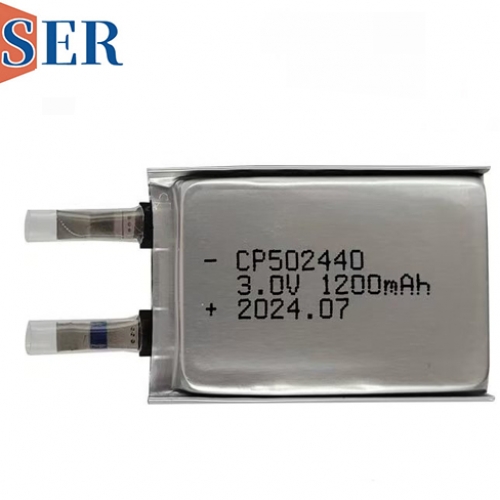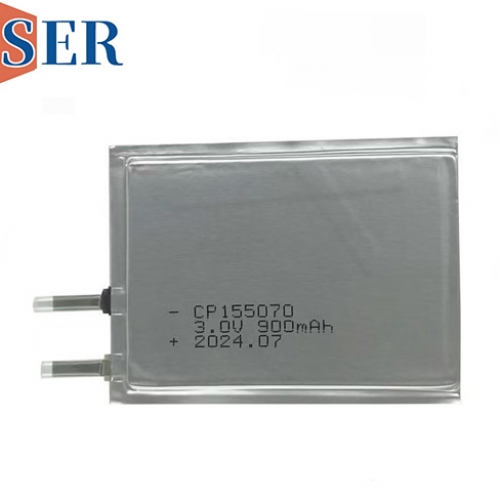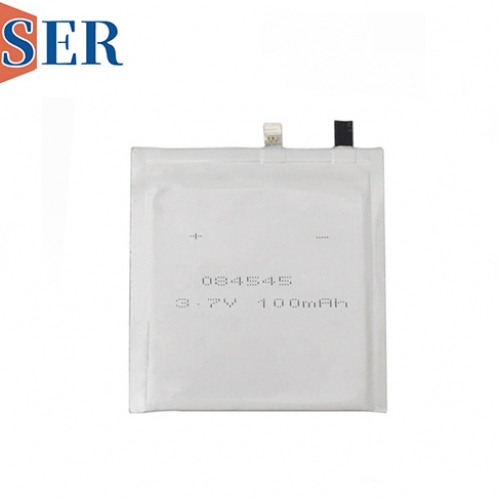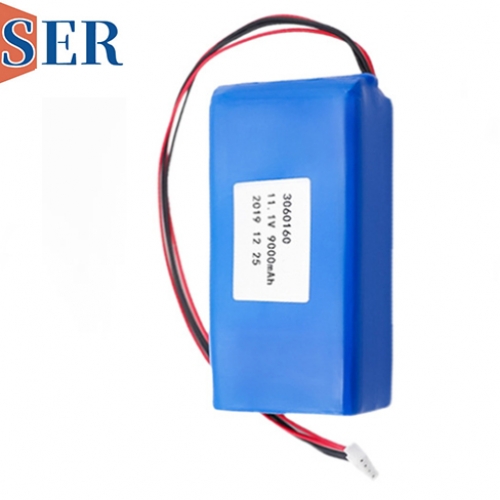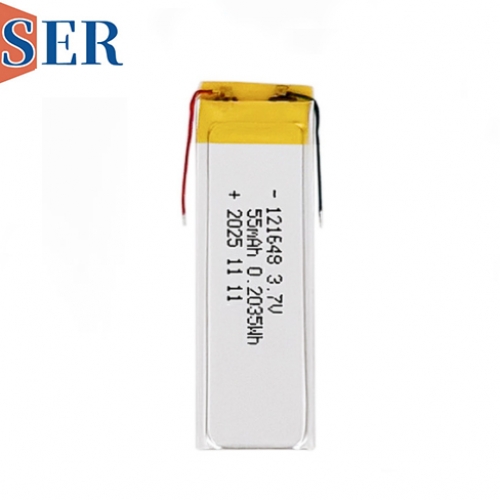
Customized Rechargeable Li-polymer Battery 3.7V 1200mAh 102540 Lipo battery for Consumer Electronics
Ultra Thin Lipo Battery: The Complete Guide to Custom Li-Polymer Power for Consumer Electronics
Introduction: Why the Right Lipo Battery Changes Everything
Every modern consumer device — from a pocket-sized GPS tracker to a wireless earbud and a portable medical monitor — shares one invisible dependency: the battery. And when engineers and product managers sit down to design for slim, lightweight, and long-lasting products, one technology consistently rises to the top: the Lipo battery. Short for lithium polymer, the Lipo battery family has become the default power source for compact electronics because it packs high energy density into a shape that can be customized to almost any device footprint.
Among the many form factors available, the ultra thin battery has emerged as a favorite for wearables, trackers, and other space-constrained products. A well-designed ultra thin battery lets you add runtime without adding bulk, which is exactly why consumer electronics brands keep coming back for custom configurations. In this guide, we take a deep dive into the world of Li-polymer power: what a Lipo battery is, why an ultra thin battery matters, how a specific model such as the 3.7V 1200mAh 102540 performs, where these batteries are used, and how to choose the right supplier when you need a customized solution.
Whether you are an engineer sourcing cells for a new prototype, a procurement manager comparing vendors, or a product owner planning the next generation of portable devices, this article gives you the technical clarity and practical guidance you need.
What Is a Lipo Battery?
A Lipo battery — also called a lithium polymer battery, Li-polymer battery, or LiPo cell — is a rechargeable lithium-ion battery that uses a polymer electrolyte instead of the liquid electrolyte found in conventional cylindrical cells. The polymer electrolyte is packed inside a soft, flexible aluminum-plastic film pouch, which gives the battery two decisive advantages: design freedom and a lightweight structure.
Because the pouch is soft and can be formed into nearly any shape, manufacturers can produce rectangular and pouch-style cells that fit precisely into the available space inside a device. This is a fundamental difference from rigid metal-can cells, which are limited to fixed cylindrical or prismatic dimensions. When your product has an unusual cavity, a curved surface, or a very thin chassis, a custom Lipo battery can be designed to match the cavity exactly, maximizing the usable capacity per cubic millimeter.
A standard Li-polymer cell carries a nominal voltage of 3.7V, which is compatible with a wide range of consumer electronics from Bluetooth headsets to portable medical equipment. The chemistry delivers a stable discharge platform, a low self-discharge rate, and a high cycle count when handled correctly. For most portable applications, a well-manufactured Lipo battery delivers hundreds of charge-discharge cycles before its capacity fades noticeably.
It is also worth clarifying a common naming point: "Lipo battery," "lithium polymer battery," and "Li-polymer battery" all refer to the same family of rechargeable cells. Some buyers use "pouch battery" or "soft pack battery" interchangeably, and in e-commerce listings you will often see them labeled "lithium ion polymer battery." Whatever the name, the technology is the same: high energy density, flexible form factor, and reliable rechargeable performance for consumer electronics.
Why Ultra Thin Battery Design Matters
The ultra thin battery is a specialized subset of the Lipo battery family, engineered for products where thickness is the hardest constraint. Think of a smart card, a slim fitness band, a medical patch, or a compact tracker — the battery must be measured in millimeters, sometimes just a few millimeters, while still delivering enough energy for a reasonable runtime.
Why is the ultra thin battery so important today? The answer lies in the direction of consumer electronics. Devices keep getting smaller, lighter, and more comfortable to wear, while users expect the same or better battery life. That pressure lands directly on the battery: it must shrink physically without sacrificing capacity, safety, or cycle life.
A true ultra thin battery achieves this through advanced packaging and careful cell engineering. The aluminum-plastic pouch film can be made thinner, the electrode stack can be optimized, and the cell can be configured in a flat, wide, or long format that suits the device. For example, a 102540 Lipo battery — roughly 10 mm thick, 25 mm wide, and 40 mm long — offers a classic rectangular footprint that fits neatly inside handheld and wearable products while remaining thin enough for compact enclosures.
It is important to note that "ultra thin" is relative to the application. A battery that is ultra thin for a power bank may be different from one that is ultra thin for a hearing aid. What matters is that the manufacturer can tune the thickness, width, length, and capacity to your product's exact cavity, and that is precisely what custom Lipo battery manufacturing makes possible.
Rectangular vs. Pouch: Understanding Lipo Battery Form Factors
When buyers search for a Lipo battery, they usually encounter two descriptive terms: rectangular and pouch. Understanding the difference helps you communicate clearly with your supplier and avoid ordering the wrong configuration.
A rectangular Lipo battery refers to the overall geometry of the cell — a flat, square-cornered block with a consistent thickness. The 102540 model is a textbook example: 10 mm thick, 25 mm wide, and 40 mm long. Rectangular cells are easy to integrate into devices with standard internal cavities, and they allow straightforward calculation of the space budget in CAD models. Because of their predictable shape, rectangular cells are widely used in GPS trackers, Bluetooth audio devices, mini monitoring systems, and portable medical equipment.
A pouch battery emphasizes the packaging style: the cell is sealed inside a flexible aluminum-laminated film with a heat-sealed edge. Pouch cells can be rectangular, but they can also be manufactured with rounded corners, stepped designs, or contoured shapes to match unusual device interiors. If your product has a curved or irregular cavity, a pouch-style Lipo battery with a custom outline maximizes the usable energy in that space.
For most consumer electronics, the practical distinction is less important than the specification sheet. What you should verify with your supplier are the exact dimensions (length, width, thickness, including the sealed edge), the nominal capacity, the discharge rate, the connector or wire configuration, and the protection circuit. A reputable Lipo battery manufacturer can supply both standard rectangular models and fully customized pouch designs, so your choice is driven by your device architecture rather than by supplier limitations.
Spotlight: The 3.7V 1200mAh 102540 Lipo Battery
One of the most versatile models in the Li-polymer lineup is the 102540 Lipo battery: a 3.7V cell with a rated capacity of 1200mAh and an energy content of about 4.44Wh. The numbers in the model name describe the physical size — 10 mm in thickness, 25 mm in width, and 40 mm in length — making it a compact, rectangular power source suitable for a broad range of consumer electronics.
Why is the 102540 configuration so popular? First, 1200mAh is a practical capacity sweet spot. It is large enough to support continuous or extended operation in low-power devices, yet small enough to keep the product slim and portable. Second, the rectangular footprint fits neatly into handheld gadgets, allowing designers to allocate space for batteries, PCBs, and connectors without waste. Third, the 3.7V nominal voltage matches the standard power architecture used across Bluetooth, GPS, medical, and monitoring products.
In practical terms, a 1200mAh Lipo battery can power a small GPS tracker through days of periodic transmission, keep a Bluetooth audio device playing for many hours, or sustain a mini monitoring sensor through its logging cycle. The exact runtime depends on the load profile, but the point stands: the 102540 offers a balanced combination of capacity, size, and cost that makes it a default choice for product teams.
For OEM and ODM projects, the 102540 Lipo battery can be customized further: capacity grades, wire length, connector type, PCM (protection circuit module) integration, and printed labels can all be adjusted to meet your specification. This flexibility is one of the reasons manufacturers describe such cells as "customized rechargeable Li-polymer batteries" — the base chemistry and size are standard, but the finished battery is tailored to the device.
Where an Ultra Thin Lipo Battery Is Used
The strength of a Lipo battery lies in its adaptability, and the 102540-style rectangular cell demonstrates this across four major application families.
Mini Monitoring Devices
Mini monitoring devices — including environmental sensors, data loggers, and compact security cameras — run for long periods on modest power budgets. A high-capacity Lipo battery with a low self-discharge rate keeps these devices online between maintenance cycles. The rectangular 102540 footprint fits inside compact enclosures, while the stable 3.7V platform ensures consistent sensor readings and transmission power.
GPS Trackers
GPS trackers demand a careful balance: the device must be small enough to hide in a bag, vehicle, or asset, yet powerful enough to transmit location signals repeatedly. An ultra thin battery with real capacity — like the 1200mAh 102540 — supports continuous tracking, periodic pings, and standby listening without frequent recharging. For fleet, pet, child, and asset tracking, the reliability of the cell directly affects the usefulness of the service, which is why A-grade cells matter.
Bluetooth Audio Devices
Bluetooth audio products — headsets, earbuds, portable speakers, and conference devices — are defined by their runtime and their slim profile. A Li-polymer battery delivers the high energy density these products need while allowing the designer to keep the chassis thin. With 500 cycles or more, the battery keeps performing through years of daily charging, which is exactly what users expect from premium audio gear.
Portable Medical Equipment
Portable medical equipment raises the bar on reliability and safety. Devices such as handheld monitors, infusion pumps, and patient-worn sensors cannot afford sudden power failures. A Lipo battery built with A-grade cells and robust construction provides the stable discharge and dependable cycle life these applications demand, and the soft pouch format helps keep the devices lightweight and comfortable for patients.
Key Performance Highlights of a Quality Lipo Battery
When you compare Lipo battery suppliers, certain performance attributes separate a reliable cell from a mediocre one. Here are the highlights that should appear on any serious specification sheet.
High Capacity. A 1200mAh rating in a 102540 form factor provides extended runtime for your devices. Capacity is the headline number every buyer checks, but it must be real capacity — measured under the actual discharge conditions of your application — not a theoretical value printed on a label.
Long Cycle Life. A quality Li-polymer cell is designed for 500 cycles or more, meaning the battery can be recharged hundreds of times while retaining most of its original capacity. For consumer products that are charged daily, 500 cycles translate into years of dependable service. Cycle life depends on the depth of discharge, charge rate, and temperature, but a well-built cell holds up under normal use.
Rectangular Shape. The rectangular format is ideal for compact power banks, handheld electronics, and portable devices because it maximizes packing efficiency inside standard cavities. Designers can model the battery into the enclosure with confidence, knowing the footprint will match the CAD drawing.
A-Grade Cells. "A-grade" means the cell uses premium materials and meets strict quality thresholds for capacity, internal resistance, and consistency. A-grade cells reduce the risk of premature failure, capacity mismatch in multi-cell packs, and performance drift over time. For brands, this translates into fewer returns and happier end users.
Solid State Design. Li-polymer cells use a solid or semi-solid polymer electrolyte rather than free-flowing liquid, which contributes to robust construction that withstands everyday wear and tear. The sealed pouch, when properly manufactured, resists swelling, leakage, and mechanical damage better than poorly built alternatives, giving your product a longer, safer service life.
How Customization Works: Building a Lipo Battery for Your Product
No two products are identical, which is why the phrase "customized rechargeable Li-polymer battery" is more than marketing — it is the practical reality of modern electronics manufacturing. Here is what a typical customization conversation with a Lipo battery manufacturer covers.
Dimensions. The first step is defining the physical envelope: length, width, thickness, and tolerance. Your supplier should confirm whether the dimension includes the heat-sealed edge and the tab position, since these details affect how the battery fits into the housing.
Capacity and Discharge. Capacity can often be tuned within the same footprint by adjusting the electrode stack, and the continuous and peak discharge currents must be matched to your device's power profile. A battery that cannot deliver the required current under load will show voltage sag and may trigger the protection circuit.
Connectors and Wiring. Many consumer electronics require specific connectors — JST, Molex, or custom plugs — and specific wire lengths. A manufacturer that integrates the connector and PCM in-house saves you assembly steps and reduces points of failure.
Protection Circuit (PCM). The protection circuit guards against overcharge, over-discharge, overcurrent, and short circuit. Choosing the right PCM is essential for safety and for meeting regulatory requirements, especially in medical and tracking applications.
Labeling and Packaging. Custom labels with your brand, model number, and compliance marks, plus packaging designed for your logistics, complete the picture.
The goal of customization is simple: the battery disappears into the product. It fits, it powers, and it lasts. A supplier that walks you through these decisions with engineering support is worth far more than one that only ships standard cells.
Why Quality Control and Internal Resistance Matter
Battery quality is not something you can judge from the outside. Two batteries that look identical can behave very differently under load, which is why professional buyers pay attention to manufacturing discipline and measurable parameters.
Enough capacity, lower internal resistance. A high-quality Lipo battery is specified with enough capacity — delivered capacity close to the rated value — and lower internal resistance (often abbreviated as RI or IR). Lower internal resistance means less voltage drop under load, less heat generation, and more efficient energy delivery. It also correlates with better consistency across batches, which matters when your product line uses thousands of cells.
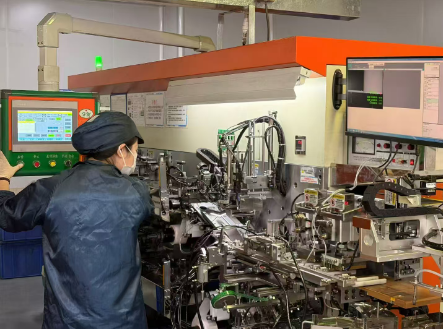
Inspection before shipment. Reputable manufacturers inspect every batch — and often every cell — before dispatch: capacity sorting, internal resistance measurement, open-circuit voltage checks, appearance inspection, and sample cycling tests. This discipline ensures that the batteries your customers receive are the batteries you approved.
Approved by clients. The strongest quality signal is repeat business. When a manufacturer's products are well approved by existing clients across different industries — consumer electronics, medical, tracking, audio — it indicates stable processes and dependable output. Ask for documentation, test reports, and references as part of your vendor qualification.
How to Choose a Reliable Lipo Battery Manufacturer
Sourcing a custom Lipo battery is a partnership, not a purchase order. Here is a practical checklist for evaluating suppliers before you commit.
Verify the specification honesty. Ask for the datasheet and compare rated capacity, internal resistance, cycle life, and operating temperature with the actual test data. Watch for inflated ratings.
Check certifications and compliance. Depending on your market, you may need UN38.3, IEC62133, CE, RoHS, and other documentation. Confirm the manufacturer can provide the certificates your target market requires.
Assess engineering support. Can they advise on PCM selection, discharge profiles, connector choices, and thermal management? A supplier that offers best-fit project solutions accelerates your development cycle.
Review quality processes. Look for incoming material control, in-line inspection, 100% functional testing, and traceability. Ask how they handle defective units and returns.
Confirm lead time and delivery reliability. On-time shipment is a business promise. A manufacturer with stable capacity and clear production planning will deliver when promised, keeping your own commitments to customers intact.
Evaluate communication. Battery specifications are detailed and iterative. A supplier that replies promptly, answers technical questions clearly, and documents decisions transparently is easier to work with across time zones.
The right partner does not just sell you a Lipo battery; they help you avoid costly design mistakes, secure your supply chain, and bring your product to market faster.
Lipo Battery Safety and Handling Essentials
Safety is the non-negotiable foundation of any Lipo battery application. While modern Li-polymer cells are robust, correct handling and usage rules protect both the product and the end user.
Use the right charger. Always charge with a charger designed for Li-ion/Li-polymer chemistry and the correct voltage (4.2V for a 3.7V nominal cell). Overcharging is the most common avoidable cause of premature aging and safety incidents.
Respect the discharge limits. Avoid deep discharge below the protection threshold. Repeated deep discharge permanently reduces capacity and can damage the cell.
Control temperature. Keep batteries away from extreme heat and direct sunlight, and avoid charging below freezing. High temperature accelerates aging; high temperature plus overcharge is dangerous.
Handle with care. Do not puncture, crush, or bend the pouch beyond its rated flexibility. The sealed edge is delicate, and mechanical abuse can breach the cell.
Store properly. For long-term storage, keep the battery at about 40–60% charge in a cool, dry environment. This slows capacity loss and maintains cycle life.
A quality Lipo battery is safe by design; a disciplined usage environment keeps it that way for the full service life.
Lipo Battery FAQ
Q1: What is the difference between a Lipo battery and a lithium-ion battery?A Lipo battery (lithium polymer) uses a polymer electrolyte in a soft pouch, while traditional lithium-ion cells typically use liquid electrolyte in rigid metal cans. Li-polymer offers more design freedom and thinner profiles, which is why it dominates consumer electronics that need compact, lightweight power.
Q2: Can I customize the capacity and size of a Lipo battery?Yes. Reputable manufacturers customize dimensions, capacity, discharge rate, connector type, wire length, and protection circuitry. A model like the 102540 can be adapted to your exact device cavity and power requirements.
Q3: How many cycles does a quality Li-polymer battery last?A well-built Lipo battery typically delivers 500 cycles or more with normal usage patterns (charging at standard rates and avoiding deep discharge). Actual cycle life varies with depth of discharge, temperature, and charge voltage.
Q4: What does 102540 mean in a battery model?The numbers describe the physical dimensions in millimeters: approximately 10 mm thick, 25 mm wide, and 40 mm long. The "102540" is a common rectangular Lipo battery format.
Q5: What is the nominal voltage of a standard Lipo battery?Most consumer Li-polymer cells have a nominal voltage of 3.7V, a full charge voltage of 4.2V, and a discharge cut-off around 3.0V. Always confirm the exact voltage window with your supplier.
Q6: What should I look for when choosing a Lipo battery supplier?Look for honest specifications, verified capacity and low internal resistance, relevant certifications, engineering support, strict quality inspection before shipment, on-time delivery, and responsive communication. A supplier with proven approvals from existing clients is a strong sign of reliability.
Conclusion: Power Your Next Product with the Right Ultra Thin Lipo Battery
The Lipo battery has earned its place as the backbone of modern consumer electronics, and the ultra thin battery extends that capability into the slimmest, lightest products on the market. Whether you are building a mini monitoring device, a GPS tracker, a Bluetooth audio product, or portable medical equipment, a well-engineered Li-polymer cell — such as the 3.7V 1200mAh 102540 — delivers the capacity, cycle life, and safety your customers expect.
What separates a good product from a great one is often invisible: the A-grade cells inside, the low internal resistance under load, the protection circuit that guards every charge, and the manufacturing discipline that inspects before shipment. These details determine whether your device runs reliably for years or fails after months.
If you are evaluating a customized rechargeable Li-polymer battery for your next project, start with clear specifications: dimensions, capacity, discharge profile, connector, and compliance needs. Then work with a manufacturer who offers engineering guidance, honest data, and dependable delivery. With the right ultra thin Lipo battery partner, you turn a design constraint into a product advantage — and bring a better, longer-lasting device to your customers.