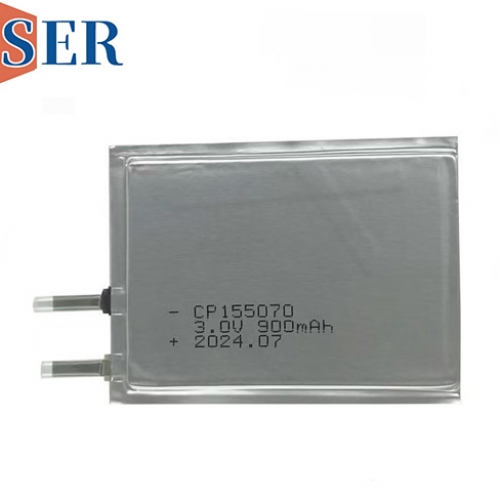
CP155070 Primary Ultra Thin Battery: The 3.0V 900mAh LiMnO2 Power Solution Redefining Wearable and IoT Device Design
CP155070 Primary Ultra Thin Battery: The 3.0V 900mAh LiMnO2 Power Solution Redefining Wearable and IoT Device Design
In an era where wearable technology, medical monitoring devices, and Internet of Things (IoT) sensors are becoming increasingly compact and sophisticated, the demand for high-performance ultra thin battery solutions has never been more critical. Design engineers across industries face a persistent challenge: how to deliver sufficient power capacity in increasingly slim form factors without compromising reliability, safety, or operational lifespan. Enter the CP155070, a cutting-edge LiMNO2 battery from SERUI that represents a paradigm shift in primary battery technology, offering an exceptional balance of thin profile, high energy density, and long-term reliability for modern portable electronics.
As devices continue to shrink in thickness while expanding in functionality, traditional cylindrical and prismatic batteries can no longer meet the stringent spatial requirements of next-generation designs. The primary ultra thin battery category has emerged as the definitive solution, enabling product designers to create devices that are not only aesthetically appealing but also capable of delivering years of maintenance-free operation. In this comprehensive guide, we will explore how the CP155070 LiMNO2 battery addresses the most pressing power challenges facing today's electronics engineers and why it stands out in the competitive landscape of ultra thin power solutions.
The Evolution of Ultra Thin Battery Technology: Why LiMnO2 Chemistry Leads the Pack
The journey toward today's advanced ultra thin battery technology has been marked by significant chemical and engineering innovations. For decades, device designers relied on alkaline batteries, nickel-metal hydride (NiMH) cells, and early lithium chemistries, each with notable limitations that constrained product design. Alkaline batteries suffered from low energy density and poor low-temperature performance, while NiMH cells exhibited high self-discharge rates that made them unsuitable for long-life applications. Even early lithium-ion rechargeable batteries, while offering decent energy density, presented safety concerns, required complex charging circuits, and had limited cycle life in ultra-thin form factors.
The breakthrough came with the maturation of lithium manganese dioxide (LiMnO2) chemistry, a primary (non-rechargeable) battery system that offered a unique combination of properties perfectly suited for ultra-thin applications. Unlike rechargeable lithium-polymer batteries that require protection circuits and have self-discharge rates of 5-10% per month, LiMNO2 battery technology delivers exceptional shelf life, stable voltage output, and excellent pulse capability, all in a flat, flexible pouch format.
Key Advantages of LiMnO2 Chemistry for Thin Battery Applications
1. Exceptionally Flat Discharge VoltageOne of the most significant advantages of LiMnO2 chemistry is its incredibly stable 3.0V nominal voltage output throughout 90% of its discharge cycle. This contrasts sharply with alkaline batteries that experience gradual voltage decline from 1.5V to 0.8V, or even some lithium chemistries that show noticeable voltage sag under load. For precision sensors, medical devices, and wireless communication modules, this voltage stability translates directly to more accurate measurements, reliable circuit operation, and consistent performance without the need for complex voltage regulation circuits.
2. Ultra-Low Self-Discharge RatePremium primary ultra thin battery designs based on LiMnO2 chemistry achieve self-discharge rates of less than 1% per year at room temperature. This remarkable characteristic means that devices can sit in storage or remain in standby mode for years without significant capacity loss. Compare this to rechargeable lithium-polymer batteries that typically lose 2-5% of their charge per month, requiring frequent recharging even when not in use, and the advantage for long-deployment applications becomes immediately apparent. For devices like disposable medical sensors, asset tracking tags, and emergency beacons that may sit idle for months or years before activation, this low self-discharge is not merely convenient—it is an absolute engineering necessity.
3. Wide Operating Temperature RangeLiMnO2 batteries demonstrate exceptional performance across extreme temperature conditions, typically operating reliably from -40°C to +60°C. This wide temperature tolerance makes them ideal for outdoor IoT sensors, cold chain monitoring devices, industrial equipment, and wearables used in both arctic explorations and desert environments. The CP155070, in particular, maintains excellent discharge characteristics even at temperature extremes where competing battery chemistries suffer dramatic capacity loss or complete failure.
4. No Passivation Layer IssuesUnlike lithium thionyl chloride (LiSOCl2) batteries that develop a passivation layer during storage which can cause initial voltage delay, LiMnO2 batteries deliver instant power even after years of storage. This instantaneous response is critical for applications requiring immediate activation, such as emergency devices, radio-frequency identification (RFID) tags, and motion-activated sensors. There is no "wake-up" period or voltage lag—power is available the moment the circuit closes.
5. Safety and Environmental BenefitsLiMnO2 chemistry is inherently safer than many other lithium systems, with no risk of thermal runaway under normal operating conditions. The pouch cell design with aluminum-laminated film packaging eliminates the risk of explosion that can occur with rigid metal-cased batteries under extreme abuse. Additionally, LiMnO2 batteries contain no toxic heavy metals such as lead, mercury, or cadmium, making them more environmentally friendly and easier to dispose of in compliance with global regulatory requirements.
Introducing the CP155070: A Primary Ultra Thin Battery Engineered for Modern Electronics
The CP155070 from SERUI represents the culmination of years of research and development in thin-film battery technology and advanced LiMnO2 chemistry. Specifically designed for wearable devices, medical sensors, and compact IoT applications, this LiMNO2 battery delivers an impressive 900mAh capacity in an incredibly slim 1.6mm profile, setting new standards for energy density in ultra-thin primary cells.
Detailed Technical Specifications
Let's examine the technical parameters that make the CP155070 a standout choice for design engineers:
Parameter | Specification | Engineering Significance |
|---|---|---|
Nominal Voltage | 3.0V | Directly compatible with most low-voltage ICs and microcontrollers, reducing component count |
Rated Capacity | 900mAh @ 0.2C to 2.0V @ 23°C | Provides ample energy for multi-year operation in low-duty-cycle devices |
Dimensions | 1.6 × 50.5 × 70mm | Ultra-slim profile enables integration into devices less than 2mm thick |
Constant Discharge Current | 450mA | Supports continuous operation of sensors, microprocessors, and low-power radios |
Maximum Pulse Current | 900mA | Delivers instantaneous power for Bluetooth transmissions, display backlights, and motor actuators |
Operating Temperature | -40°C to +60°C | Reliable performance across extreme environmental conditions |
Storage Temperature | 0°C to 25°C | Optimal long-term storage conditions preserving capacity for 10+ years |
Annual Self-Discharge Rate | <1% per year | Ensures long shelf life and minimal capacity loss during device dormancy |
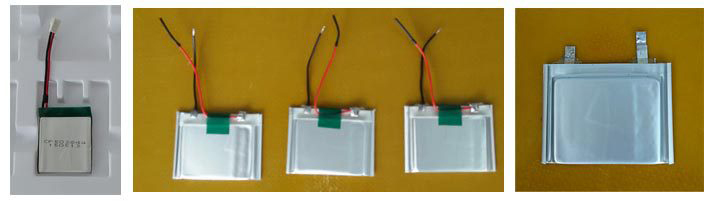
Termination Options | Nickel tabs, wire leads, custom connectors | Flexible integration with various PCB designs and assembly processes |
Design Advantages of the CP155070 Ultra Thin Battery
Slim Form Factor Without CompromiseAt just 1.6mm thick, the CP155070 ultra thin battery is thinner than two credit cards stacked together, yet it packs 900mAh of capacity. This remarkable energy density is achieved through advanced electrode coating technology that maximizes active material loading while maintaining uniform thickness across the entire cell surface. Unlike thinner cells that sacrifice capacity for slimness, the CP155070 strikes an optimal balance, giving designers the freedom to create sleek, ergonomic devices without accepting inadequate battery life.
Soft Pouch Construction for Design FlexibilityThe CP155070 utilizes a flexible aluminum-laminated film pouch construction instead of rigid metal casings. This design approach offers multiple benefits: it reduces weight by approximately 30% compared to equivalent prismatic cells, allows for slight curvature to fit ergonomic wearable designs, and provides excellent safety characteristics through controlled swelling rather than rupture in fault conditions. The soft pack design also means that the battery can be custom-sized to fit specific device enclosures, with SERUI offering full OEM customization services for unique form factors.
Optimized for Pulse ApplicationsModern wearable and IoT devices typically operate on a duty cycle consisting of long periods of low-power sleep mode interrupted by brief periods of high-current activity during sensing, processing, or wireless transmission. The CP155070 LiMNO2 battery is specifically engineered to excel in this operating pattern. Its low internal impedance enables it to deliver 900mA pulse currents without significant voltage drop, ensuring reliable Bluetooth Low Energy (BLE) transmissions, sensor readings, and display updates. After the pulse event, the battery voltage quickly recovers to its nominal 3.0V level, maintaining stable power for the device's sleep mode.
Customizable Termination and Connection OptionsRecognizing that every device design has unique connection requirements, SERUI offers multiple termination options for the CP155070 primary ultra thin battery. Standard options include nickel tabs for direct soldering to PCBs, insulated wire leads for flexible placement within the device housing, and custom connectors matching popular board-to-board or wire-to-board interconnect standards. The engineering team also works directly with customers to develop application-specific termination solutions, including specialized tab geometries, connector types, and wire lengths to streamline assembly processes.
Applications Where the CP155070 LiMNO2 Battery Delivers Exceptional Value
The unique combination of thin profile, high capacity, long shelf life, and reliable pulse performance makes the CP155070 ultra thin battery ideally suited for a diverse range of applications across multiple industries. Let's explore some of the key use cases where this battery outperforms competing power solutions.
1. Wearable Health and Fitness Devices
The wearable technology market continues its rapid expansion, with consumers demanding devices that are not only feature-rich but also comfortable enough for 24/7 wear. Smart health monitors, continuous glucose monitors (CGMs), fitness trackers, wearable ECG monitors, and temperature-sensing patches all require batteries that can conform to body contours while delivering months or years of uninterrupted operation.
The CP155070's 1.6mm thickness allows it to be integrated into sleek wrist-worn devices, discreet skin patches, and even smart clothing without creating uncomfortable bulk. Its 3.0V output directly powers the optical sensors, analog front-ends, and BLE radios used in these devices, while its 900mAh capacity supports multi-month operation on a single battery. For disposable medical wearables designed to be worn for 7-30 days and then discarded, the CP155070 eliminates the need for recharging entirely, simplifying the user experience and reducing compliance issues associated with remembering to charge devices.
The wide operating temperature range is particularly valuable for body-worn devices, as it ensures consistent performance whether the user is skiing in freezing temperatures or exercising in hot, humid conditions. Unlike some competing batteries that experience accelerated self-discharge at body temperature, the LiMnO2 chemistry maintains its stable performance characteristics even during prolonged skin contact.
2. Medical Devices and Patient Monitoring Systems
In the medical field, reliability is non-negotiable. Battery failure in a medical device can lead to inaccurate readings, missed data points, or even life-threatening situations. The CP155070 LiMNO2 battery has been engineered with medical-grade reliability in mind, making it suitable for a wide range of portable and wearable medical applications.
Single-use diagnostic devices, portable patient monitors, drug delivery systems, implantable neurostimulators (in customized hermetic configurations), and wearable therapeutic devices all benefit from the CP155070's stable voltage output and long shelf life. For devices used in emergency medical settings, the ultra-low self-discharge rate ensures that the battery is ready to deliver full power even after sitting in storage for years. The flat discharge curve means that medical sensors receive consistent voltage throughout the device's operational life, ensuring accurate measurements without drift or recalibration.
Additionally, the non-magnetic properties available in customized versions of SERUI's LiMnO2 batteries make them suitable for use in MRI-compatible devices, an increasingly important requirement as more medical procedures incorporate real-time MRI guidance.
3. IoT Sensors and Asset Tracking Devices
The Internet of Things continues to expand into every sector, from industrial monitoring and smart agriculture to logistics and building automation. Many of these IoT sensors are deployed in hard-to-reach locations where battery replacement is impractical or prohibitively expensive. A smart temperature sensor in a refrigerated warehouse, a moisture sensor buried in agricultural soil, or an asset tracker attached to a shipping container may need to operate for 5-10 years on a single battery.
The CP155070 primary ultra thin battery is perfectly suited for these long-deployment applications. Its <1% annual self-discharge rate means that a battery deployed today will retain over 90% of its capacity after a decade in storage. When configured for low-duty-cycle operation—sleeping at microamp currents and waking only to take readings and transmit data periodically—the 900mAh capacity can support over 5 years of continuous operation. The excellent pulse capability supports reliable LoRa, NB-IoT, or BLE data transmissions even after years in the field, while the wide temperature range ensures operation in unconditioned environments from frozen food processing facilities to desert solar installations.
For asset tracking applications, the thin profile allows the CP155070 to be embedded in slim tags that can be attached to packages, equipment, or even high-value goods without adding noticeable bulk. The high energy density means that even small tags can deliver years of tracking capability without maintenance.
4. Smart Cards and Security Devices
The next generation of smart cards—including biometric payment cards, secure access cards with displays, one-time password (OTP) tokens, and electronic identification (eID) cards—require integrated power sources that can fit within the standard 0.76mm card thickness (or slightly thicker specialized form factors). While thinner batteries exist for these applications, they often lack the capacity to power fingerprint sensors, small displays, or cryptographic processors for the card's multi-year lifespan.
The CP155070, at 1.6mm thickness, serves the growing market of enhanced smart cards and security fobs that prioritize multi-year functionality over the absolute thinnest profile. Its high pulse current can power fingerprint matching algorithms and small e-paper displays, while the 900mAh capacity supports thousands of authentication events over the card's lifetime. For security applications where reliability is paramount, the instant-on capability of LiMnO2 chemistry ensures immediate response during authentication attempts, with no frustrating delay for the user.
5. Portable Electronics and Consumer Wearables
Beyond medical and industrial applications, the CP155070 finds use in a wide range of consumer electronics products. Smart jewelry, wearable cameras, electronic shelf labels, portable GPS trackers, Bluetooth beacons, and even innovative toys benefit from the battery's combination of slimness and long life. For product designers creating devices where user experience is paramount, eliminating the need for charging removes a significant point of friction. Consumers no longer need to remember to charge their smart rings, luggage trackers, or wearable cameras—the devices simply work for their entire intended lifespan.
Electronic shelf labels (ESLs) represent another rapidly growing market, with retailers deploying millions of digital price tags that need to operate for 5-7 years on a single battery. The CP155070's stable voltage ensures consistent display performance across thousands of price updates, while the thin form factor allows integration into slim label housings that attach seamlessly to store shelves.
CP155070 vs. Competing Ultra Thin Battery Technologies
When selecting a power source for their designs, engineers must compare multiple battery technologies to identify the optimal solution for their specific requirements. Let's examine how the CP155070 LiMnO2 battery stacks up against competing ultra thin battery options.
LiMnO2 Primary Batteries vs. Lithium Polymer (LiPo) Rechargeable Batteries
Lithium polymer batteries are perhaps the most well-known thin battery technology, widely used in smartphones, smartwatches, and other consumer electronics. However, they have significant limitations for many applications:
Self-discharge: LiPo batteries typically self-discharge at 2-5% per month, meaning they lose 24-60% of their capacity per year in storage. The CP155070 loses less than 1% annually.
Charging infrastructure: LiPo batteries require charging circuits, USB ports, and user intervention to recharge. Primary LiMnO2 batteries are maintenance-free for their entire lifespan.
Cycle life: Thin LiPo batteries may only offer 300-500 charge cycles before significant capacity degradation. The CP155070 delivers consistent performance throughout its single, long discharge life.
Safety: While LiPo batteries are generally safe, they can swell, catch fire, or explode if punctured or overcharged. LiMnO2 pouch cells have inherently safer chemistry.
Shelf life: LiPo batteries degrade even when not in use, typically lasting 2-3 years from manufacture. The CP155070 can be stored for 10+ years and still deliver full capacity.
For devices intended to operate for years without maintenance, or for disposable products where charging is impractical, the primary ultra thin battery LiMnO2 solution like the CP155070 is clearly superior.
LiMnO2 vs. LiSOCl2 (Lithium Thionyl Chloride) Batteries
Lithium thionyl chloride batteries are another primary lithium chemistry known for extremely high energy density and very low self-discharge. However, they have notable drawbacks:
Voltage delay: LiSOCl2 batteries develop a passivation layer during storage, causing a voltage delay when first loaded. This can cause device startup failures. The CP155070 delivers instant voltage with no passivation issues.
Pulse performance: LiSOCl2 batteries have relatively high internal resistance and struggle to deliver high pulse currents without significant voltage drop. The CP155070 handles 900mA pulses with ease.
Safety concerns: LiSOCl2 batteries use toxic, corrosive thionyl chloride as electrolyte, presenting safety and environmental hazards. LiMnO2 chemistry uses benign organic electrolytes.
Temperature performance at extremes: While both chemistries work in cold temperatures, LiMnO2 often delivers better pulse performance at low temperatures due to lower impedance.
LiSOCl2 may be preferable for ultra-low-current, decade-long deployments where pulses are minimal, but for applications requiring instant power and good pulse capability like wearables and active IoT sensors, the CP155070 LiMnO2 battery is the better choice.
LiMnO2 vs. Printed Thin-Film Batteries
Printed batteries represent an emerging ultra-thin technology, but they currently suffer from severe limitations:
Capacity: Printed batteries typically offer capacities in the microamp-hour to low milliamp-hour range, insufficient for multi-month or multi-year operation. The CP155070 provides 900mAh—hundreds of times more capacity.
Internal resistance: Printed batteries have high internal resistance, making them incapable of delivering meaningful pulse currents for wireless transmission.
Maturity: Printed battery technology is still in its infancy, with limited manufacturing scale and higher costs.
Discharge curve: Most printed batteries exhibit sloping discharge curves rather than the flat voltage platform of LiMnO2.
While printed batteries may eventually suit certain extremely low-power, single-use applications like smart packaging, they cannot currently compete with the CP155070 for serious wearable and IoT deployments requiring meaningful energy capacity.
LiMnO2 vs. Alkaline and Zinc Batteries
Traditional alkaline and zinc-based batteries are inexpensive but suffer from numerous disadvantages for modern thin electronics:
Energy density: Alkaline batteries have roughly 1/3 the volumetric energy density of LiMnO2, meaning they would need to be three times as large for equivalent capacity.
Voltage: Alkaline batteries provide only 1.5V, requiring two cells in series to reach 3.0V—doubling thickness.
Temperature performance: Alkaline batteries perform poorly below 0°C and leak corrosive electrolyte if deeply discharged.
Shelf life: Alkaline batteries self-discharge at 2-5% per year and often leak after 3-5 years in storage.
Discharge curve: Alkaline voltage drops steadily throughout discharge, complicating power supply design.
For compact, long-life devices, LiMnO2 technology delivers decisive advantages over legacy aqueous battery chemistries.
Why Partner with SERUI for Your Ultra Thin Battery Needs
Selecting the right battery supplier is about more than just finding a cell with the right specifications on a datasheet. It requires a manufacturing partner with deep technical expertise, rigorous quality control, flexible customization capabilities, and a commitment to long-term customer support. SERUI has established itself as a trusted leader in the LiMNO2 battery and specialty lithium battery space, serving customers worldwide with innovative power solutions for the most demanding applications.
Decades of Lithium Battery Expertise
SERUI brings years of specialized experience in primary lithium battery technology, with a particular focus on LiMnO2, LiSOCl2, and custom battery pack solutions. Unlike generalist battery manufacturers that produce a wide range of consumer and automotive cells, SERUI focuses specifically on the industrial, medical, and IoT markets where reliability and long life are critical. This specialized focus means that every aspect of the CP155070's design—from electrode formulation to electrolyte composition to packaging materials—has been optimized for the specific requirements of long-life, thin-form-factor applications.
The company's engineering team includes experts in electrochemistry, materials science, mechanical design, and manufacturing engineering, all working together to push the boundaries of what is possible in ultra thin battery performance. This depth of expertise allows SERUI to not only supply standard catalog products but also to collaborate with customers on fully customized battery solutions tailored to their unique device requirements.
Rigorous Quality Control and Certification
Quality is non-negotiable when batteries power medical devices, industrial sensors, and safety-critical systems. SERUI implements comprehensive quality management systems throughout every stage of the manufacturing process, from incoming raw material inspection through final product testing and distribution. The CP155070 and all SERUI batteries are manufactured in ISO 9001 certified facilities, with additional compliance to industry-specific standards including:
UN 38.3 transportation safety certification
IEC 62133 safety requirements for portable sealed batteries
RoHS and REACH environmental compliance
ISO 13485 medical device quality management systems for medical-grade products
Every production batch undergoes rigorous testing for capacity, voltage, internal resistance, pulse performance, and safety characteristics before leaving the factory. This commitment to quality ensures consistent performance from cell to cell and batch to batch, giving design engineers confidence that their devices will perform reliably in the field.
Full Customization Capabilities
While the standard CP155070 is an excellent fit for many applications, SERUI understands that innovative product designs often require custom battery solutions. The company offers comprehensive OEM/ODM services to tailor primary ultra thin battery designs to specific customer requirements. Customization options include:
Custom dimensions: While the CP155070 measures 1.6×50.5×70mm, SERUI can design and manufacture LiMnO2 pouch cells in virtually any rectangular dimension, with thicknesses ranging from 0.7mm to 10mm+ and footprints from a few square centimeters up to large-format cells.
Capacity tuning: Adjustments to electrode thickness and active material loading allow capacity to be optimized for specific device runtime requirements.
Voltage configurations: Multiple cells can be assembled into series/parallel configurations to achieve higher voltages (6.0V, 9.0V) or increased capacities.
Termination customization: Nickel tabs, wire leads, connectors, and even flexible printed circuit (FPC) connections can be customized to match specific PCB layouts and assembly processes.
Specialty variants: Non-magnetic versions for MRI applications, high-temperature variants for industrial and downhole use, and enhanced pulse versions for communication-heavy applications can all be developed in collaboration with customers.
SERUI's engineering team works closely with customers from the earliest stages of product development, providing design guidance, samples, and technical support to ensure seamless integration of the battery into the final device. This collaborative approach reduces development time, minimizes integration risks, and helps customers bring their products to market faster.
Competitive Lead Times and Global Support
In today's fast-paced electronics market, speed to market is essential. SERUI maintains efficient manufacturing processes and strategic inventory positions to offer competitive lead times for both standard products like the CP155070 and custom-designed cells. The company's global sales and support network ensures that customers around the world receive responsive technical assistance, from initial inquiries through production ramp-up and long-term after-sales support.
With export capabilities serving customers across North America, Europe, Asia-Pacific, and beyond, SERUI has established itself as a global leader in specialty primary lithium batteries. The company understands international logistics, regulatory requirements for different markets, and the importance of reliable supply chains for high-volume product manufacturing.
Designing with the CP155070: Practical Engineering Considerations
To help engineers successfully integrate the CP155070 LiMNO2 battery into their designs, here are some practical considerations and best practices:
Discharge Profile Understanding
The CP155070 exhibits a very flat discharge curve, maintaining approximately 3.0V for approximately 90% of its capacity before a gradual drop-off to the 2.0V cutoff voltage. Designers should select components with a minimum operating voltage of 2.0V or lower to extract maximum capacity from the cell. For devices requiring precise voltage regulation, a simple low-dropout (LDO) regulator can provide a stable 2.8V or 2.5V supply with minimal energy loss.
Pulse Loading Optimization
While the CP155070 can deliver 900mA pulse currents, optimal battery life is achieved by keeping pulse durations as short as possible and using appropriate bulk capacitance on the device PCB to handle instantaneous current demands. Adding a 100-470µF ceramic capacitor across the battery supply can help minimize voltage drop during high-current pulses, reducing the stress on the battery and improving overall efficiency. For wireless transmissions, configure the radio module to use the highest possible data rate to minimize transmission duration.
Storage and Handling Best Practices
To maximize battery performance and lifespan:
Store batteries at 0-25°C in a dry environment, avoiding temperatures above 30°C which can accelerate self-discharge
Avoid soldering directly to the battery tabs with excessive temperatures or dwell times, as heat can damage the cell seals
Do not reverse polarity, short circuit, incinerate, or mutilate the batteries
For long-term product storage, consider shipping devices with batteries separately or using insulating pull-tabs to prevent discharge during storage
Thermal Considerations
While the CP155070 operates reliably across -40°C to +60°C, optimal capacity delivery occurs between 0°C and 40°C. For devices operating continuously at extreme high or low temperatures, capacity derating may apply—SERUI's engineering team can provide detailed discharge curves at specific temperatures to support accurate battery life modeling.
Battery Life Estimation
To estimate battery life for a specific application, calculate the device's average current consumption by summing:
Sleep mode current × fraction of time in sleep
Active mode current × fraction of time active
Pulse current × fraction of time transmitting/processing
Divide the 900mAh rated capacity by this average current to get an approximate lifetime, then apply a derating factor of 0.8-0.9 to account for temperature effects, end-of-life voltage considerations, and manufacturing tolerances. For example, a device averaging 20µA current consumption could theoretically operate for 900mAh / 0.02mA = 45,000 hours = approximately 5 years, making it ideal for long-life IoT deployments.
Frequently Asked Questions About the CP155070 Primary Ultra Thin Battery
Q: Is the CP155070 rechargeable?A: No, the CP155070 is a primary (non-rechargeable) LiMnO2 battery. Attempting to recharge primary lithium batteries can cause leakage, venting, or rupture and is dangerous. For rechargeable thin battery applications, SERUI also offers a range of lithium polymer (LiPo) batteries, but the CP155070 is specifically designed for applications where long life, zero maintenance, and no charging are desired.
Q: What is the typical shelf life of the CP155070?A: When stored at room temperature (0-25°C), the CP155070 retains over 90% of its rated capacity after 10 years of storage, thanks to its ultra-low self-discharge rate of less than 1% per year. This makes it ideal for products that may spend months or years in the supply chain before being activated by the end user.
Q: Can the CP155070 be used in implantable medical devices?A: The standard CP155070 is designed for external and portable devices. For implantable applications, SERUI can develop custom hermetically sealed variants with appropriate medical-grade certifications through its custom engineering program. Contact SERUI's medical battery team to discuss specific implantable requirements.
Q: Is the battery flexible?A: The CP155070 uses a soft pouch construction that allows limited flexing, but it is not designed to be repeatedly bent or folded like some flexible thin-film batteries. For applications requiring curvature (such as wrist-worn devices), the cell can be installed with a slight fixed curvature during assembly, but dynamic flexing during use should be minimized to prevent internal damage. For highly flexible applications, consult SERUI engineering about custom flexible battery designs.
Q: What certifications does the CP155070 carry?A: The standard CP155070 is UN 38.3 certified for transportation, IEC 62133 compliant for safety, and meets RoHS and REACH environmental requirements. Medical-grade versions manufactured under ISO 13485 quality systems are available for medical device applications.
Q: Can SERUI provide custom battery packs with multiple CP155070 cells?A: Absolutely. SERUI designs and manufactures custom battery packs using CP155070 cells and other LiMnO2 cells in series and parallel configurations to meet specific voltage and capacity requirements. Packs can include PCM protection circuits, connectors, wires, and custom housings as needed.
Q: What is the minimum order quantity (MOQ) for custom versions?A: For the standard CP155070, small quantities are available for prototyping and evaluation. For custom-sized cells or custom termination, MOQs typically start at 1,000-5,000 pieces depending on the complexity of customization. SERUI works with both startups developing their first products and large OEMs with high-volume production requirements.
Conclusion: Powering the Next Generation of Thin, Connected Devices
As electronic devices continue their relentless march toward thinner profiles, longer life, and greater functionality, the importance of selecting the right ultra thin battery technology cannot be overstated. The CP155070 from SERUI represents the state of the art in LiMNO2 battery technology, delivering an unmatched combination of 1.6mm ultra-slim profile, 900mAh high capacity, 3.0V stable voltage, <1% annual self-discharge, and reliable 900mA pulse capability.
For wearable device designers creating the next generation of health monitors and fitness trackers, for IoT engineers deploying sensors that must operate for a decade without maintenance, for medical device developers who cannot compromise on reliability, and for consumer electronics innovators who want to eliminate charging friction from their products, the CP155070 primary ultra thin battery offers a compelling power solution.
SERUI stands ready to be your power partner, providing not just a standard battery cell, but a full engineering collaboration that includes technical support, customization capabilities, rigorous quality assurance, and global supply chain reliability. Whether you are designing with the standard CP155070 or require a completely custom LiMnO2 battery solution tailored to your unique product requirements, SERUI's team of battery experts is available to help you select, integrate, and optimize the perfect power source for your application.
Explore the full potential of thin battery technology. Contact SERUI today at sales@serui-battery.com to request CP155070 samples, discuss your custom battery requirements, or learn how SERUI's complete line of LiSOCl2, LiMnO2, LiPo, and specialty lithium batteries can power your most innovative product designs. Visit www.serui-battery.com to view the complete product catalog and discover why leading device manufacturers worldwide trust SERUI for their most critical power needs.