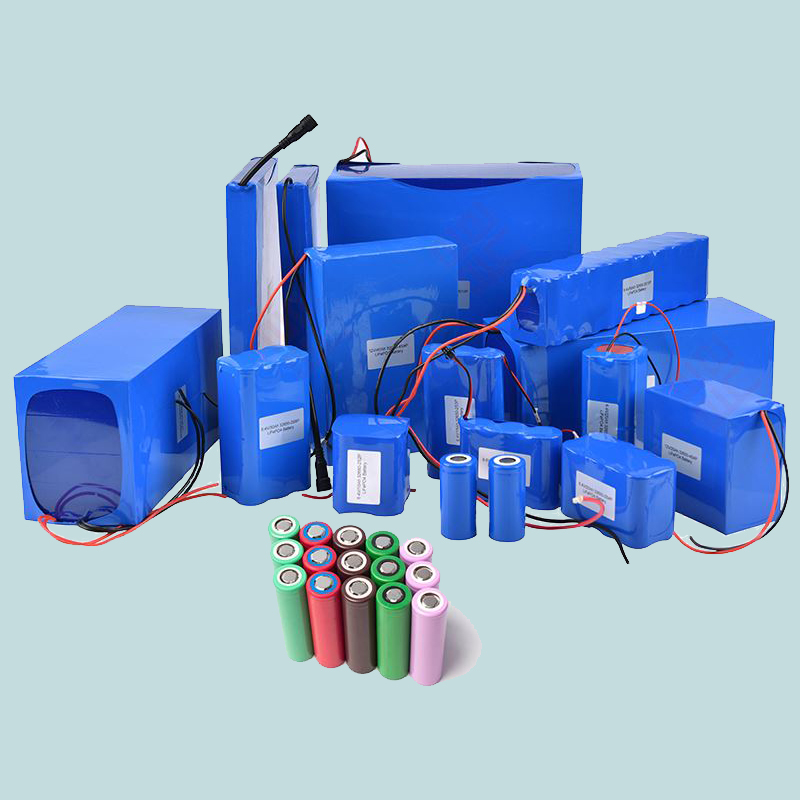
The voltage increase and decrease of lithium battery and the methods
1. Test of voltage increase and decrease of lithium battery
First, let the lithium battery reduce to 3.3V by reducing the voltage chip, then provide power to the microcontroller and the Bluetooth module, and plan to increase it to 7V to drive a load.
Result: The bluetooth module does not work and cannot be searched. Remove the bluetooth, the microcontroller and the load are working normally. When the MCU is removed, the bluetooth and the load work normally. Without reducing the voltage, when a group of power supplies is used alone, all three work normally.
Description: xc6206 for lowering the voltage and fd6291 for increasing the voltage.
2. The problem of increasing the voltage and reducing the voltage of lithium batteries
Let's analyze the reasons for the above problems, find out the common faults of lithium battery voltage increase and decrease voltage, and learn together.
Lithium-ion batteries have a certain range of single voltage. For example, the normal operating voltage range of lithium iron phosphate batteries is 2.5V-3.65V, and the normal operating voltage range of lithium manganate and ternary batteries is 3V-4.2V.
In the application of lithium-ion battery, when the total voltage is 60V and below, a battery protection board is required. Above 60V, a battery management system (BMS) is required. The role of these two devices is to protect the battery from working properly.
Note that after the number of battery packs in series is determined, the battery pack voltage cannot be adjusted arbitrarily. That is, the voltage change of the battery pack can only change within the normal operating voltage range: when charging, it rises from the lower voltage limit to the upper voltage limit. When using electricity, it will drop from the upper voltage limit to the lower voltage limit.
Understand this problem, if you want the lithium battery to increase and decrease the voltage range is very large, you can adjust it at will.
The best solution: make a set of battery packs, match with a suitable inverter, and then match with a DC voltage regulator, which can meet the requirements of increasing and decreasing the voltage of lithium batteries.
Note: This method is rarely used in practical applications, and this method of increasing and decreasing the voltage will only be considered when the AC power used is frequently out of power, or when the battery pack is charged by solar energy or wind.
The boosting and buckling methods of the above lithium battery can be used in the test, and the effect of research and study is good.